At 11:00 p.m., the brick buildings of Toulouse can still release the heat they’ve stored since the afternoon. The outdoor seating areas are full, the city remains beautiful, but in a poorly insulated room, sleep is hard to come by. It’s often at this moment that air conditioning ceases to be just a technical specification. It becomes a matter of hospitality.
When the Night No Longer Does Its Job
For a long time, we thought of heat as something that happened during the day. When evening came, we’d open the windows, and the air would eventually start to circulate. This familiar pattern breaks down during the hottest spells. The walls have stored up heat, the streets release it slowly, and the outside air no longer provides the expected relief.
This is what a search for a hotel with air conditioning near Toulouse tells us, quite simply. Behind the interest in air conditioning, there’s rarely a passion for the equipment itself. There’s a trip that ran longer than expected, children who need to sleep, the prospect of spending a comfortable wedding night at a high-quality wedding venue in Toulouse, a morning meeting, the need to enhance an employer’s brand image for a seminar in a cool Toulouse setting, or the desire to enjoy Toulouse without dreading the return to the hotel room.
In Occitanie, this concern is by no means a passing one. Météo-France estimates that the regional average temperature could rise by 2.2 °C by 2050 compared to the 1976–2005 period. For the hospitality industry, summer comfort is therefore no longer just a luxury extra. It is gradually becoming part of the very definition of a successful night’s stay.
Hotels with Air Conditioning: Comfort or Necessity?
The topic tends to elicit strong, polarized views. According to some, air conditioning is a symbol of comfort that has become unreasonable. For others, it is simply a technical given, about which there is little left to debate. The reality, as is often the case, lies in how it is used.
An improperly sized unit, set too low, or maintained carelessly will consume energy unnecessarily. High-performance equipment, used during peak hours and set to a reasonable temperature, tells a different story. We must also consider the electricity that powers it. In France, where electricity is largely decarbonized, this results in a different carbon footprint for air conditioning than in countries that are still heavily dependent on coal or natural gas. Different does not mean neutral. The nuance matters.
Air conditioning is appropriate when a building’s natural insulation is no longer sufficient to ensure a good night’s sleep and comfort. Its use remains appropriate as long as it is used sparingly, properly adjusted, and integrated into an overall design that prioritizes limiting heat gain.
Before the cold comes the shadow
Summer comfort begins long before you press a button on the remote control. Shutters closed at the right time, nighttime ventilation, walls that retain their thermal mass, proper insulation, or trees that block the sun often do more than an appliance running at full power at the end of the day.
These so-called passive solutions do, however, have their limitations. When temperatures remain high for several nights in a row, even a well-designed building eventually runs out of air. Air conditioning then returns to its simplest function: not to create extreme cold, but to bring the room back to a temperature where the body can finally rest.
ADEME recommends a setting of at least 26 °C. This temperature can sometimes be surprising, because it doesn’t match the common image of a freezing lobby or a cold room. Yet it reflects a more accurate approach. In the summer, comfort comes from gaining a few degrees at the right time, not from artificially recreating the conditions of November.
The most elegant freshness is often the kind you barely notice: it helps you sleep, then fades into the background.
Around Toulouse, the landscape changes the sensation of heat
Leaving the city center doesn’t automatically guarantee a cool night. That would be too simple. But the landscape profoundly changes the way we experience summer. In the city, building facades, rooftops, and paved surfaces store the sun’s energy. In a greener environment, shade returns, the ground breathes more freely, and you can still linger outside without immediately seeking refuge in a closed room.
A park is obviously not an air conditioner. It offers something else: a connection between indoors and outdoors. You can take a walk early in the morning, read under a tree, head to the water when the heat rises, and then return to a comfortably cool room when it’s time to retire for the night. Comfort no longer depends on a single machine. It becomes a way of living through the day.
At Camboyer, freshness doesn’t need to be staged
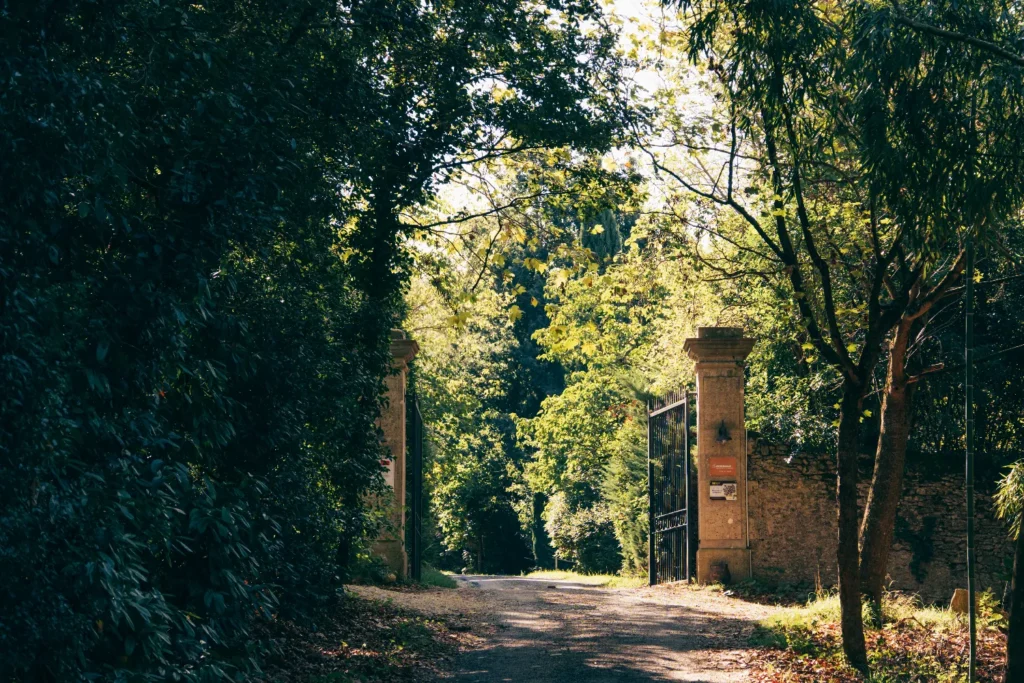
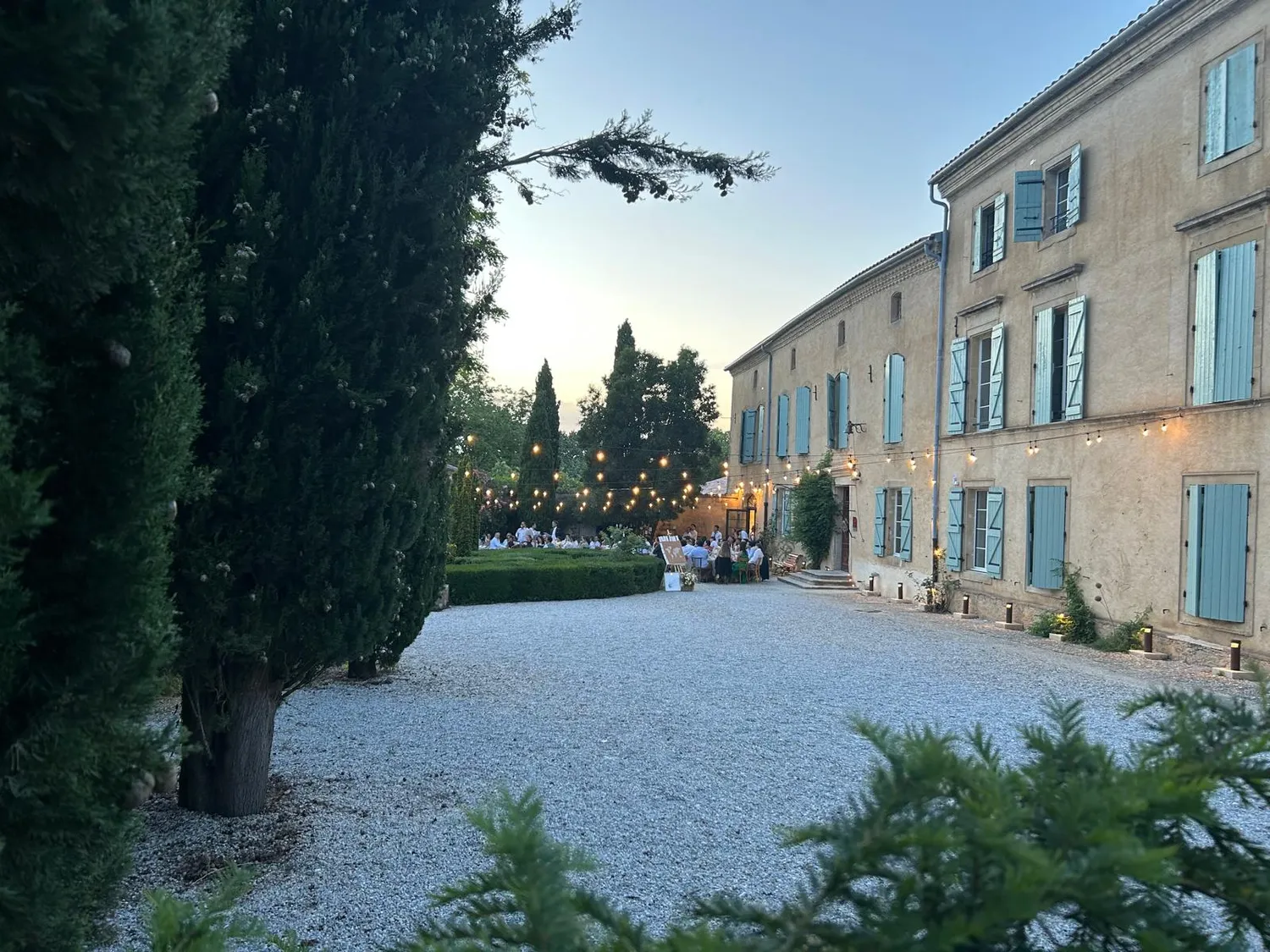
In Montferrand, about 45 minutes from Toulouse, the Domaine de Camboyer is a hotel near Toulouse that offers a rather rare example of this continuity. The air-conditioned rooms are housed in a restored 17th-century mansion, set amid nearly nine hectares of grounds. The stone architecture, century-old trees, and sweeping views lend the place a presence that cannot be manufactured.
Here, air conditioning isn’t the main focus. And that’s undoubtedly what makes it believable. It kicks in when the thickness of the walls, the shade, and the evening breeze are no longer enough. It provides protection at night without detracting from the house’s character. Upon waking, you’re greeted by views of the park, tranquility, and that sense of space found in places that have remained removed from the hustle and bustle.
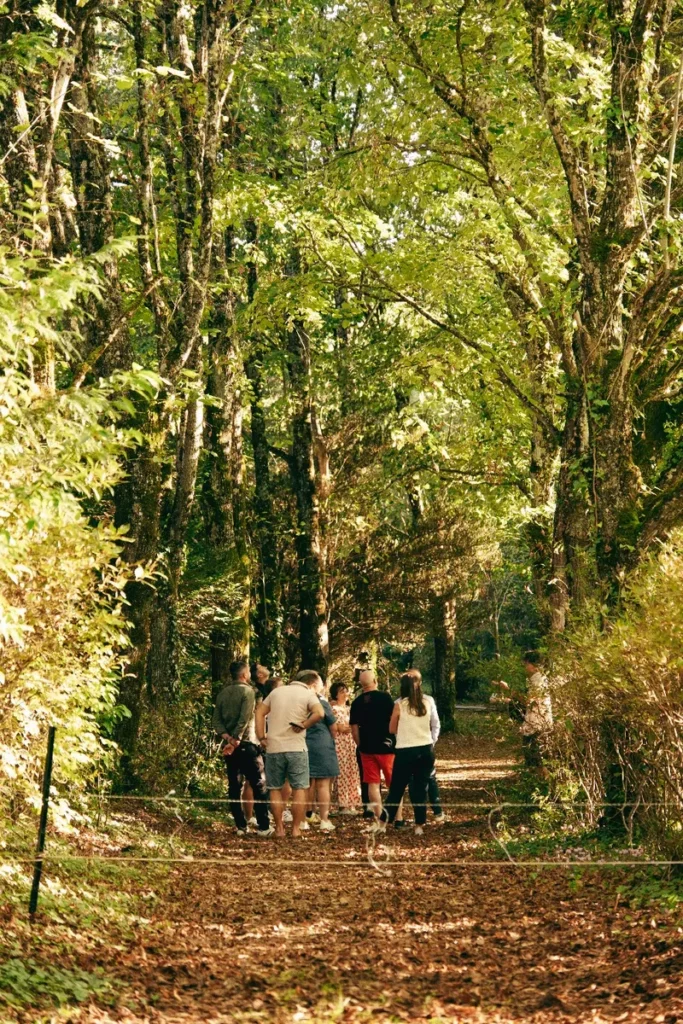
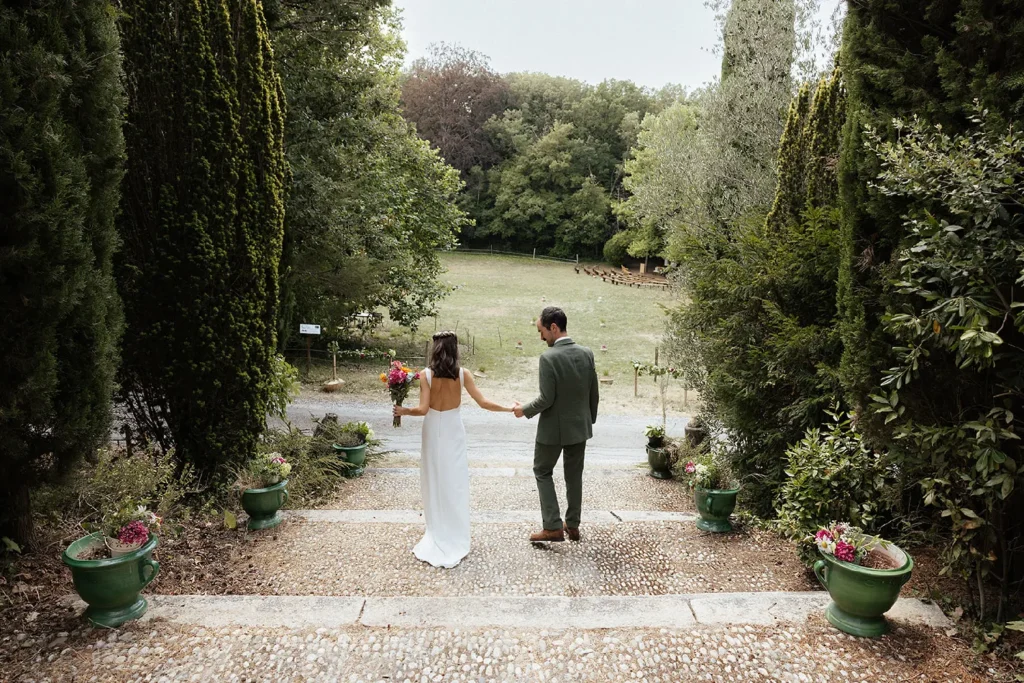
The estate’s grounds, designated a Sensitive Natural Area and recognized as an LPO Refuge, are an integral part of this experience. The pool extends the late afternoons. The guest rooms then allow you to return to a comfortable temperature, without a sudden break from the season. The European Ecolabel, awarded to the Domaine, provides a broader framework for this quest to balance a high-quality guest experience with a commitment to resource conservation.
Nothing spectacular, then. Rather, a series of thoughtful choices whose value becomes apparent as your stay unfolds. That, too, is what luxury is all about: not imposing comfort, but ensuring it’s there.
What to Consider Before Booking
The term “air conditioning” alone doesn’t tell the whole story. It could refer to common areas, certain room categories, or the entire property. A phone call or a few well-written lines on the website can usually clear up any confusion.
Individual adjustment is also important. Not everyone perceives heat in the same way, and a temperature imposed on an entire building does not offer the same level of precision as a system that can be adjusted with care. The quiet operation of the equipment, the quality of the curtains or blinds, and sound insulation are just as important for a good night’s sleep.
Then there’s everything that isn’t included in the term “air conditioning”: the chance to dine on site, leave your car in the parking lot, head to a pool, or take a short walk under the trees. During heat waves, these little details add up to a much more relaxing experience than constantly moving between overheated places.
Summer luxury has taken on a new dimension
The luxury hotel industry has long been drawn to ostentation. Everything had to be bigger, more lavish, more impressive. The summers ahead are bringing us back to more basic expectations: a quiet room; lighting that can be dimmed; gentle coolness; and the ability to sleep without feeling too cold or too hot—and without being aware of the machine keeping watch.
Looking for a hotel with air conditioning near Toulouse, then, isn’t simply giving in to a trivial demand. It’s asking an establishment to take care of a night’s sleep that has become more fragile. At Camboyer, this care is reflected in the harmonious blend of a historic residence, a vibrant park, and contemporary comfort that knows its place.
People don’t come here to forget about summer. They come to experience it in a different way—and then to really sleep.
To prepare for your stay: Explore the rooms at the Domaine de Camboyer and check availability.
Frequently Asked Questions
Why choose an air-conditioned hotel near Toulouse rather than in the city center?
Because the desire for coolness often goes hand in hand with a need for peace and quiet, space, and parking. A less concrete environment also makes the hottest hours of the day more pleasant, even though air conditioning remains useful when the nights no longer cool down.
Is a temperature of 26 °C really comfortable for sleeping?
How comfortable it feels depends on humidity, air circulation, bedding, and individual sensitivity. ADEME’s recommendation is primarily aimed at avoiding excessive temperature differences with the outside and unnecessary energy consumption. In a well-shaded and quiet bedroom, 26 °C can provide satisfactory comfort.
Is air conditioning compatible with an environmentally conscious hotel?
It still has an impact, particularly through its electricity consumption and refrigerants. However, it can be integrated into a coherent approach when it complements passive solutions, relies on high-performance equipment, and operates with a reasonable setpoint.
How far is Domaine de Camboyer from Toulouse?
The estate is located in Montferrand, in the Lauragais region, approximately 45 minutes by car from Toulouse. It is also close to the A61 motorway and the Avignonet-Lauragais train station.
References and Sources
- Météo-France, “What Will the Future Climate Be Like in Occitanie?” https://meteofrance.com/changement-climatique/quel-climat-futur-en-occitanie
- ADEME: “5 Ways to Reduce Your Air Conditioning Usage” https://agirpourlatransition.ademe.fr/particuliers/amenager-maison/climatiser-rafraichir/climatisation-limiter-consommation-electricite
- ADEME, “Heat Waves: Will Air Conditioning Become Indispensable?” ” https://infos.ademe.fr/changement-climatique/2024/vagues-de-chaleur-la-climatisation-va-t-elle-devenir-indispensable/
- RTE, 2025 French Electricity Outlook: https://analysesetdonnees.rte-france.com/bilan-electrique-2025/synthese
- Ministry of Ecological Transition, Adapt Bâti Confort Program: https://www.ecologie.gouv.fr/presse/lancement-du-programme-adapt-bati-confort-finance-certificats-deconomie-denergie-cee
- Educational video used for context: “Everyone Is Wrong About Air Conditioning”: https://www.youtube.com/watch?v=Ea-OFKwKX3c