September has this somewhat unique quality: it gives the impression that everything is starting over, even though, technically speaking, nothing has really stopped. The files are still there, as are the goals; the inboxes have simply taken advantage of the summer to get a little bloated. Yet, in your teams’ minds, things have changed. We’re coming back with new ideas, sometimes new hires, and often new priorities. That’s precisely why a back-to-work workshop can be useful—as long as you don’t reduce it to just a longer meeting, followed by lunch and a hastily chosen activity.
A good back-to-school seminar should achieve more than just a group photo. It should create a real turning point and give the team a clear enough direction so that everyone knows what they’ll need to do the following Monday.
Why is the start of the school year such a special time in the life of a team
The feeling of a “fresh start” isn’t just a school tradition we’ve carried over into adulthood. In behavioral psychology, several studies have examined what researchers call the fresh start effect. A study published in *Management Science* by Hengchen Dai, Katherine Milkman, and Jason Riis shows that certain temporal markers—such as the start of a week, a month, a year, or a semester—can increase motivation to set new goals.
The start of the work year serves quite well as one of these reference points. It mentally separates a “before” from an “after.” This is particularly useful for a company that wants to restart a collective process after the summer break.
It would be a mistake, however, to assume that the energy from September is enough. A fresh start is not a strategy. A team may return feeling motivated but lose that energy within a few weeks if priorities remain unclear, if the issues from the previous semester haven’t been addressed, or if the workshop merely announces goals that have already been decided elsewhere.
The primary purpose of a back-to-school seminar is therefore quite simple: to turn the feeling of getting back into the swing of things into a moment of realignment.
Before building unity, start by sorting things out
The word “cohesion” has become the Swiss Army knife of corporate seminar. It’s used to justify a meeting, a workshop, a hike, a quiz, or a tasting. Yet a team doesn’t always need to be “more united.” Above all, it may need to understand what really matters.
The start of the school year is an excellent time to ask three fairly basic—but rarely unnecessary—questions: What has worked since the beginning of the year? What’s holding us back? What are the three priorities that should be clear to everyone by December?
The workshop then becomes a space for sorting things out. We keep what works, let go of certain habits, clarify trade-offs, and give teams the opportunity to understand the reasoning behind decisions. This last point is essential. An imposed priority can be carried out. A priority that is understood is more likely to be embraced.
The Trap of the Big September PowerPoint
We’ve all seen it before. A comfortable room. Coffee. A screen. Then 120 slides reminding employees that this isn’t a joke.
Presenting information is obviously not a waste of time. But if the back-to-school seminar is nothing more than a top-down information session, it misses the very point of bringing people together in one place.
It is essential to foster an environment where everyone can take a risk in a discussion or when speaking up, ask a question, point out a problem, or admit a mistake without fear of immediate social repercussions. This cannot be achieved through a twenty-minute workshop. But the way a meeting is organized can either open up this space for dialogue or shut it down.
For a back-to-school seminar, this implies a useful rule: management should speak, but it shouldn’t dominate the room.
What might a truly useful back-to-school seminar program look like?
Obviously, there is no one-size-fits-all program. A 12-person executive committee seminar, a 40-person sales team, and a company that has just merged do not all have the same needs. But one structure works particularly well: alternating levels of engagement and formats.
The morning can begin with a brief, factual review. Not a critique of the previous semester, but rather a snapshot: results, successes, challenges, and changes in circumstances. Next comes the time to set the course: the priorities for the start of the school year and the decisions that follow.
At this stage, it’s best to resist the temptation to fill in every box. Three clear priorities are generally better than a list of fifteen “strategic areas” that no one will remember the next day over coffee.
The late morning can be devoted to small-group workshops. This is where subcommittee sessions really come into their own: each group works on a specific issue, then returns to share its conclusions with the entire group. Participants are no longer asked to simply listen to a strategy; they are asked to apply it to their own reality.
After lunch, the pace needs to change. A walk, a group activity, a creative workshop, or an outdoor session can provide a breather. Not to “fill” the afternoon, but because attention isn’t infinite, and not all meaningful conversations happen around a U-shaped table.
Is it really necessary to plan a team-building activity?
No. And that’s probably good news for anyone who’s ever had to build a spaghetti tower with their coworkers.
The team-building makes sense when it serves a specific purpose. A newly formed team may need to get to know one another. A team that works in silos can benefit from an activity that puts cooperation into practice. Above all, an exhausted group may need a moment to relax and enjoy each other’s company.
The activity must therefore come after the question, not before it. “What do we want to produce together?” is a better starting point than “What activity haven’t we done yet?”
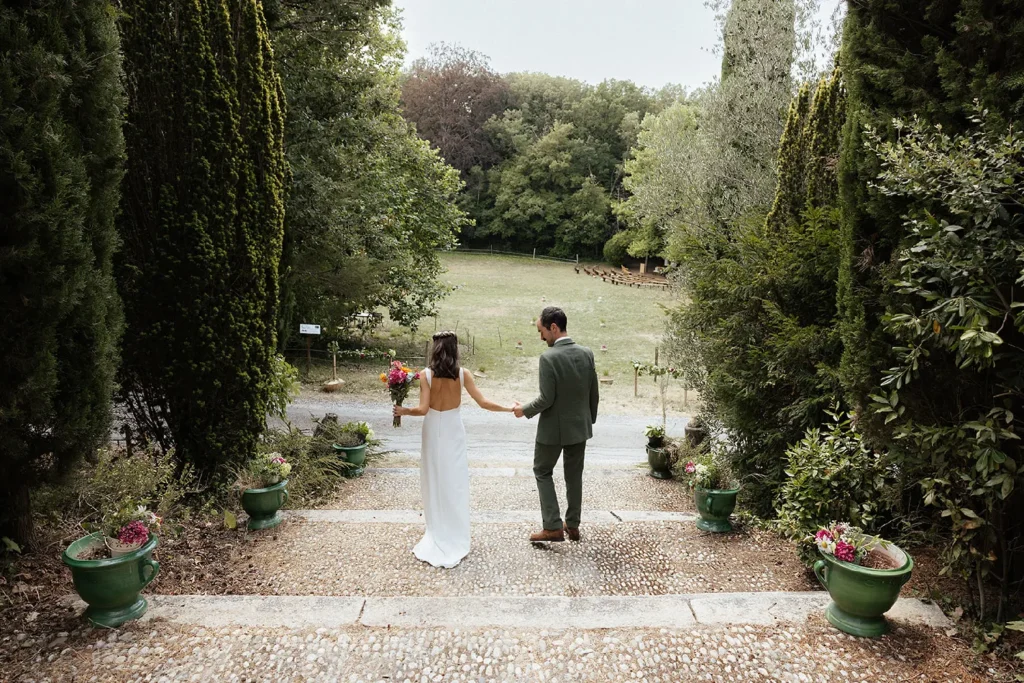
At Camboyer, this approach can take many different forms: outdoor activities, exploring the park, biking, experiences centered on the local region, creative workshops, or activities related to the estate’s environmental commitments. The setting also allows guests to choose something much simpler: walking, chatting, or just slowing down. A successful seminar doesn’t have to feel like a TV show.
Change locations to change the conversation
Why leave the office if you already have a meeting room? It’s a valid question. And the answer isn’t “because it looks better on LinkedIn” to hold a seminar in the great outdoors out in the great outdoors.
A change of setting first and foremost breaks the routine of daily life. At the office, participants are constantly surrounded by cues that keep drawing them back to their usual tasks: phone calls, colleagues dropping by, emergencies, multiple screens, and back-to-back meetings. A seminar deliberately removes some of that noise.
The natural environment can also play a role, provided we do not attribute magical powers to it. Many studies, however, show that exposure to natural environments improves certain cognitive processes, particularly working memory and cognitive flexibility. It comes as no surprise that beautiful natural spaces are conducive to cognitive restoration. But according to the latest rigorous studies on the subject, the effect is more modest than previously thought.
In other words, a park doesn’t automatically turn a poor agenda into a great strategy. But stepping outside your usual routine, taking a walk, breathing deeply, and taking real breaks can create better conditions for thinking.
The Domaine de Camboyer offers a chance to step back and gain perspective. For an executive committee or management team, confidentiality, the option to reserve the venue exclusively, and the balance between work time and informal time are more than just hotel amenities. They contribute to the quality of the conversation.
One day or two days? The duration should serve the purpose
For a local team that wants to take stock, set a course, and make a few key decisions, one day may be enough. It even forces the team to be disciplined.
A two-day event becomes interesting when you need to cover multiple topics, host employees from different locations, work on a major transformation, or make room for informal discussions. Dinner and the evening can then become valuable opportunities—as long as you don’t turn the trip into an organized marathon.
The Domaine de Camboyer offers precisely this flexibility. Located about 45 minutes from Toulouse, it brings together on a single site modular meeting spaces, a 4-star hotel, dining options, and extensive grounds. The Domaine can also be reserved exclusively for events requiring greater privacy. This format is particularly well-suited for executive committee meetings, board meetings, project launches, or residential seminars, as evidenced by testimonials from companies that have already hosted events there.
The point isn’t to simply pile on activities. It’s to prevent logistics from breaking the seminar up into separate parts. When the meeting, lunch, workshops, outdoor activities, and possibly overnight stays all take place in the same location, the group can maintain its sense of continuity.
The start of the academic year can also be a good time to talk about working methods.
A back-to-work seminar isn’t meant to solve the company’s structural problems. A beautiful day in the Lauragais region won’t erase chronic overload, poorly defined responsibilities, or inconsistent management.
That is precisely why the seminar can be helpful: it provides a space to bring certain topics to the table before they become a constant presence in the coming months.
The quality of the work environment, communication, and workplace relationships are among the factors that can affect mental health at work. A seminar is obviously not a prevention policy. But a well-prepared return to work can be an opportunity to collectively reexamine how things are done.
It’s less spectacular than a zip line. It’s also much harder to photograph. But it can be even more impressive in November.
A successful back-to-school seminar, then, is not just a brief interlude. It’s a turning point. It marks the end of one phase and gives clearer shape to the one that’s beginning. It’s the following Monday that will set the tone for the success of your back-to-school seminar.
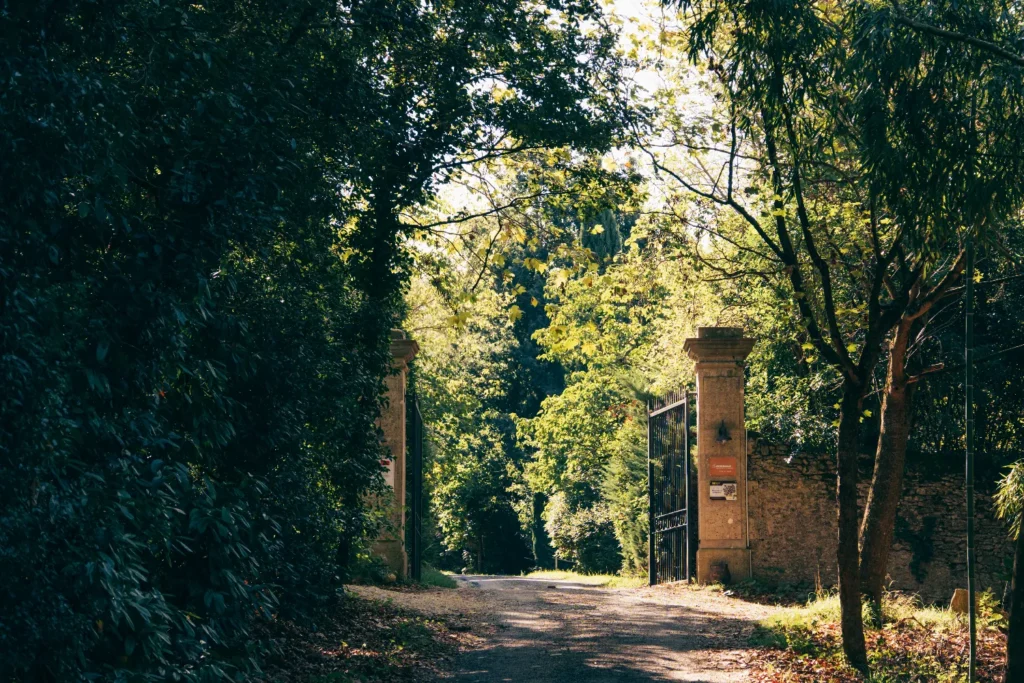
About 45 minutes from Toulouse, in the Lauragais region, the Domaine de Camboyer conference center offers a setting particularly well-suited to this kind of respite: workspaces that allow you to alternate between plenary sessions and small groups, a natural setting, the option to stay on-site, and, above all, enough distance from everyday life to ensure productive conversations.
The start of the new school year already feels like a fresh start. We might as well take this opportunity to decide together which direction to take.
FAQ: Organizing a Back-to-School Seminar
When Should You Organize a Back-to-School Seminar?
September is the most obvious time, but a seminar held through the first half of October still makes perfect sense as a back-to-work event. The right time depends mainly on the company’s schedule: it’s better to wait until the team has actually returned and is available rather than organizing the event too early when several people will be absent.
What goals should you set for a back-to-work seminar?
The most useful objectives generally include reviewing the past year, clarifying priorities for the coming months, addressing certain collective issues, integrating new employees, and translating strategic directions into concrete actions. Team cohesion is often a result of this work rather than a standalone objective.
Where can you hold a back-to-school seminar near Toulouse?
The choice depends on the number of participants, accommodation needs, and the program. To truly get away from the daily grind while remaining within easy reach of Toulouse, a venue located less than an hour from the city can offer a good compromise. In Montferrand, the Domaine de Camboyer hosts corporate seminars, study days, executive committee meetings, and residential events in a natural setting between Toulouse and Carcassonne.
How much time should you allow for a back-to-school seminar?
One day is sufficient for a review, strategic realignment, and a few workshops. Two days are more appropriate when the company wants to combine in-depth discussion, breakout sessions, group activities, dinner, and informal time, or when participants are coming from multiple locations.
Sources and References
Dai H., Milkman K. L., Riis J. (2014), “The Fresh Start Effect: Temporal Landmarks Motivate Aspirational Behavior,” Management Science. View the study
Edmondson A. (1999), “Psychological Safety and Learning Behavior in Work Teams,” Administrative Science Quarterly. View the study
Stevenson, M. P., Schilhab, T., & Bentsen, P. (2018), “Attention Restoration Theory II: A Systematic Review to Clarify Attention Processes Affected by Exposure to Natural Environments,” *Journal of Toxicology and Environmental Health*, Part B. View the study
Journal of Environmental Psychology (2025), “The relationship between nature exposure and attention restoration, as moderated by exposure duration: A systematic review and meta-analysis.” View the study
World Health Organization, “Mental Health in the Workplace,” updated 2024. View the fact sheet
MICE Occitanie, “Rent an Exceptional Estate to Take in the View.” Read the article